A Harvest Supper for a Blustery Evening
A harvest supper for a blustery evening can stay welcoming with a flexible pot, a simple accompaniment and a make-ahead sweet, without unsafe holding.
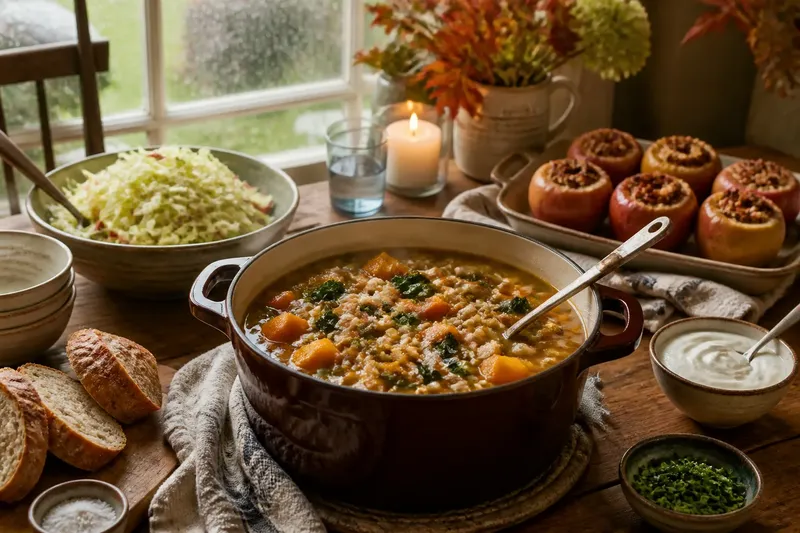
Rain taps at the kitchen window, one guest has texted that the bus is delayed, and another is hanging up a damp coat. A harvest supper for a blustery evening works best when the food can wait safely: a pot of autumn vegetables and beans, bread or grains alongside, and a sweet prepared earlier.
The aim is not to keep every dish at its peak for a fixed serving time. It is to make room for early arrivals and late ones without leaving cooked food at an uncertain temperature or starting dinner again from scratch.
Hold the harvest pot safely when dinner is delayed
A stew may taste settled before the doorbell rings, but a long simmer can soften vegetables too far and reduce the liquid. Turning off the heat and leaving a covered pot on the hob is not a reliable way to keep cooked food safe: a warm hob does not maintain a known temperature.
Cook the vegetables until tender but still holding their shape, then serve promptly if the delay is brief. If dinner must wait, cool the pot promptly, transfer it to the fridge, and reheat it thoroughly when needed, following local food-safety guidance and any instructions for the ingredients or appliance. Do not leave the pot sitting out while you wait for guests.
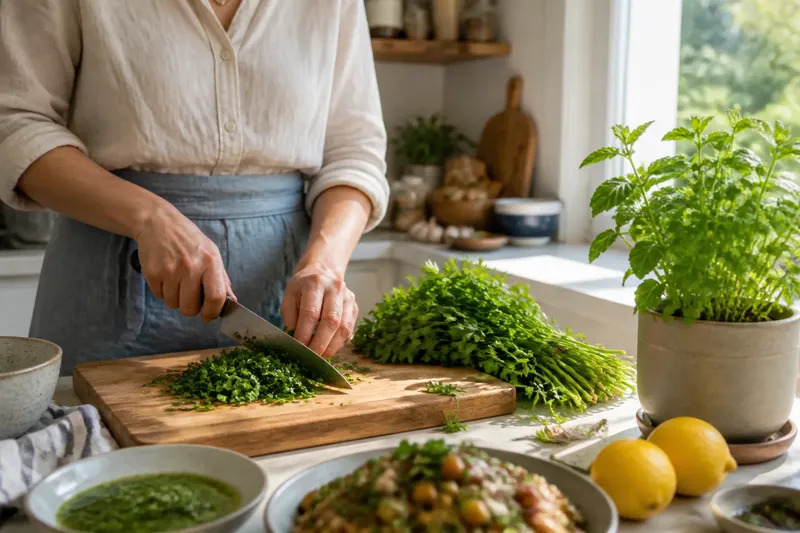
Beans, onions, carrots, squash, cabbage, mushrooms and root vegetables all work in a flexible harvest pot. Keep delicate additions such as parsley, cream or lemon until serving; they bring freshness without needing the whole dish to cook longer.
If the sauce thickens during refrigeration, loosen the portion being reheated with a little water or stock. Taste it again and adjust the seasoning once it is hot.
Serve at different times without holding everyone back
A shared meal becomes stressful when the host expects everyone to sit down at once. Keep serving spoons and bowls ready, and make the food easy to portion in more than one pass.
For an early arrival, offer bread, apple slices or olives while coats are put away. This small welcome takes the edge off without creating another course to manage.
Say you have made squash-and-bean stew with barley, and one guest texts that they will arrive after the others have eaten. Refrigerate the stew rather than leaving it on the hob; once the guest arrives, reheat one portion thoroughly in a small pan, adding a splash of water if needed. The expected result is a hot bowl for the late guest without delaying the first group.
Choose an accompaniment that can wait
A one-pot supper loses its ease if the side dish needs close attention just as the stew is ready. Choose something that can be made ahead and served as it is or refreshed simply.
Crusty bread can be sliced shortly before serving and warmed in the oven if convenient. Barley, brown rice or potatoes can be prepared ahead and reheated according to their package directions. A crisp salad of shredded cabbage and grated apple adds a fresh contrast without competing for a hob ring.
Think about texture rather than adding another elaborate dish. A creamy bean stew benefits from something crisp or tart; a brothy vegetable soup may need bread or a grain to make it satisfying. One accompaniment is enough if it has a clear purpose.
Add seasonal vegetables in the order they soften
Autumn produce does not all cook at the same pace. Dense squash or parsnip can remain firm while cabbage turns limp, and mushrooms can release liquid that thins a sauce.
Start with the ingredients that need the longest cooking, such as diced root vegetables. Add cabbage nearer the end and tender greens when the pot is nearly ready. If using tinned beans, rinse them and add them late enough to heat through without breaking apart.
Cut ingredients into similarly sized pieces within each group so they cook more predictably. Season in stages, then taste the finished liquid: stock and tinned beans may already be salty. A little cider vinegar or lemon can sharpen a heavy-tasting pot, while black pepper and chopped herbs can lift its aroma.
Make dessert easy to serve at an unhurried table
Choose a sweet that can be finished before guests arrive and served without precise timing: baked apples, a fruit crumble, stewed pears with yoghurt or a tray of oat biscuits.
For baked apples, core the fruit, fill the centres with oats, chopped nuts or dried fruit, and bake until tender. They can be served warm or at room temperature with yoghurt, custard or cream; choose a filling that suits your guests and the ingredients available.
If you make a crumble, bake it earlier and let it settle. Serve it at room temperature, or warm it while the main pot is being reheated. Keep cream or yoghurt chilled until serving, then put it on the table in its own bowl rather than leaving it out while the meal unfolds.
Biscuits and fruit are easy to offer individually. A pudding in one dish can stay covered until the table is ready.
What can be prepared ahead without losing its appeal?
Can I make the harvest pot the day before?
Many bean and vegetable stews can be cooked ahead, cooled promptly and refrigerated. Reheat thoroughly before serving, and keep herbs, cream and other finishing touches separate until then.
What should I do if I do not know when dinner will begin?
Do not rely on a covered pot on a warm hob to hold safely. If dinner is not ready to serve, refrigerate the cooked food promptly and reheat it thoroughly when needed.
Which vegetables work well in a one-pot supper?
Onions, carrots, squash, potatoes, cabbage and cooked beans are adaptable choices because they can be added in stages. Use local seasonal produce and adjust the order according to how quickly each ingredient cooks.
How can I make the meal work for different diets?
Build the pot around vegetables and beans, with optional toppings such as cheese, yoghurt or cream served separately. Check labels on packaged stock, bread and prepared foods, and ask guests about dietary needs before choosing substitutions.
Set the table for an easy second serving
Put a trivet beneath the pot, leave a clear place for bread and accompaniments, and set a serving spoon in each dish. A jug of water and a small bowl for scraps save repeated trips to the kitchen.
Use sturdy bowls, mismatched plates or a tea towel beneath a bread basket if that is what you have to hand. Leave room for guests to pass dishes and refill at their own pace.
For a harvest supper on a blustery evening, make the meal forgiving rather than elaborate. Keep cooked food chilled when it cannot be served promptly, and reheat only what is needed; that leaves you free to welcome whoever comes through the door.