Why Resting Dough Changes Its Feel
Why resting dough changes its feel: learn what flour absorbs during a pause and what to look for before shaping bread, pastry or fresh pasta.
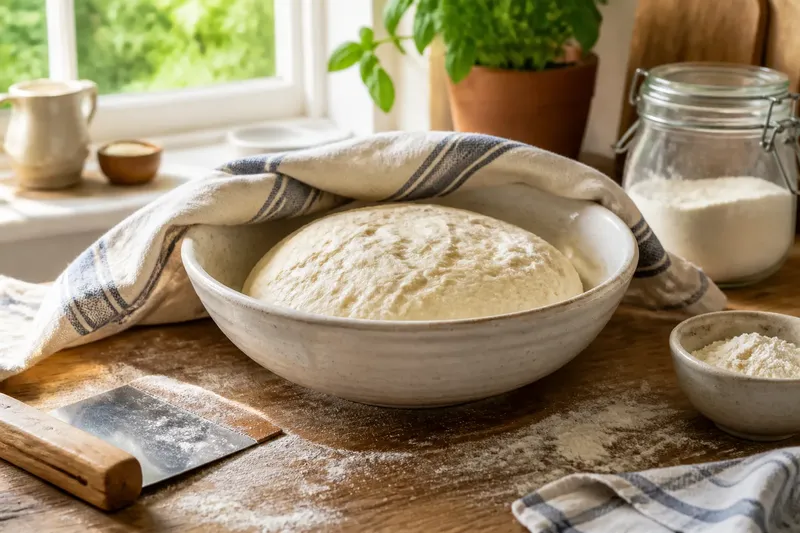
You mix flour and water, scrape a sticky mass from the bowl and wonder if it needs more flour. Before reaching for the bag, give the dough a pause. Why resting dough changes its feel comes down chiefly to moisture moving through the flour and the dough’s structure settling into a more workable state.
The change is not magic, and a rest does not fix every mixing problem. It does give you a better chance to judge the dough by touch before shaping it. Here are five things to notice during that pause.
1. Flour takes time to absorb moisture
When water first meets flour, it wets the outer surfaces of flour particles. Stirring brings the ingredients together, but it does not mean moisture has spread evenly through the mixture. A short rest lets more of the flour absorb water, so patches that felt dry or coarse can soften.
This is particularly noticeable in doughs mixed by hand, where a few dry pockets may hide beneath a damp surface. Cover the bowl so the exposed dough does not form a skin, then leave it undisturbed. When you return, the mass may look less ragged and feel more cohesive.
Resting does not mean adding water later is never needed. If dry flour remains in the bowl after the pause, work it in gradually rather than tipping in extra liquid all at once. The aim is to let the mixture settle before making another adjustment.
2. A rough dough can become easier to gather
Freshly mixed dough often tears or breaks when you try to pull it into one piece. As flour absorbs water and the mixture rests, the pieces can cling together more readily. The dough may still be firm, but it can feel less crumbly and easier to gather with a scraper or your hands.
Imagine you have just mixed a simple bread dough and find floury crumbs around the edges of the bowl. You cover it and leave it while you clear the worktop; when you return, the crumbs may have softened enough to join the main mass with gentle folding. That visible change suggests the flour has had more time to take up moisture, not that you need to knead harder.
For sticky dough, use a dough scraper to lift and fold rather than pressing in a handful of flour immediately. Extra flour changes the balance of the mixture and can make the shaped result denser than intended.
3. The dough may resist your hands less
Some doughs feel tacky at first because their surfaces are wet while the flour inside is still taking up liquid. After resting, the same dough may feel smoother or less prone to smearing across your fingers. It may still be sticky; tackiness alone is not a sign that something has gone wrong.
Notice whether the dough releases from the bowl more cleanly, whether it can be lifted without stretching into a smear, and whether it holds together when folded. These observations are more useful than asking whether it feels perfectly dry. A soft dough often needs a lightly floured surface or a scraper, not enough flour to make it feel dry.
For pastry, a pause can also make the dough easier to roll without crumbling at the edges. Keep the dough covered, and handle it gently when you bring it back to the work surface.
4. Resting gives the dough a clearer shape
Right after mixing, dough can look uneven: one side taut, another loose, with folds and ridges left by the bowl. Given time, it often relaxes into a more uniform mass. That makes it easier to see whether it is firm enough to shape or still needs a little more attention.
Look for a surface that appears more even and a mass that can be lifted as one piece. If you gently press it, the dough should yield rather than crumble apart. The exact feel differs between bread, pastry and pasta dough, so judge it against the texture the recipe describes rather than expecting every dough to behave alike.
A rest is also a useful pause before committing to a shape. If the dough keeps shrinking back as you form it, covering it and allowing it to relax further may make the next attempt less resistant.
5. The pause helps you choose the next move
Resting is a chance to reassess, not an automatic instruction to continue shaping. If the dough is now cohesive and manageable, move on. If it remains dry and cracked, check whether dry flour is still present and whether the recipe calls for additional liquid; if it remains very loose, use the recipe’s handling method rather than correcting by instinct alone.
Recipe directions matter because flour type, liquid and intended use all affect how dough feels. Follow the recipe and any relevant manufacturer instructions where applicable; use your fingers and scraper to observe the dough without assuming one texture suits every bake.
For a simple check, lift one edge with a scraper and fold it towards the centre. A dough that gathers without breaking into crumbs is ready for the next handling stage described in your recipe. If it tears or smears, cover it again and give it more time before deciding whether an adjustment is needed.
What should you look for before shaping?
Should rested dough feel completely dry?
No. Many doughs remain slightly tacky, and trying to remove all stickiness can lead to too much added flour. Look instead for a dough that holds together and can be handled using the technique its recipe calls for.
How can you tell whether flour has absorbed the water?
Check whether floury patches have softened and whether the dough has become more cohesive. A scraper can help you lift and fold it gently so you can see whether dry crumbs remain underneath.
Should you knead dough during its rest?
Usually, resting means leaving the dough covered and undisturbed for the period specified by the recipe. Some recipes include a fold or other handling step, so follow that method rather than treating every rest as identical.
Can resting make a poor dough right?
A pause can improve how evenly a dough feels, but it cannot correct every imbalance in ingredients or mixing. If it remains unusually dry or loose, refer to the recipe’s guidance before adding flour or liquid.
Why resting dough changes its feel is easiest to understand with a small, repeatable check: cover it, wait as directed, then lift and fold one edge. That pause lets you judge moisture and cohesion before shaping, when a careful touch can prevent an unnecessary handful of flour.