Fresh Herbs: A Bunch or a Pot?
Fresh herbs, as a bunch or a pot, are easier to use well when you match your choice to the next meal, available storage and growing space.
You have parsley to chop for supper, but the shop offers a loose bunch while the windowsill holds a pot of mint. Fresh herbs are easier to choose as a bunch or a pot when you match the form to the dish, the amount you need and the space you can spare.
Fresh herbs as a bunch or a pot suit different cooking
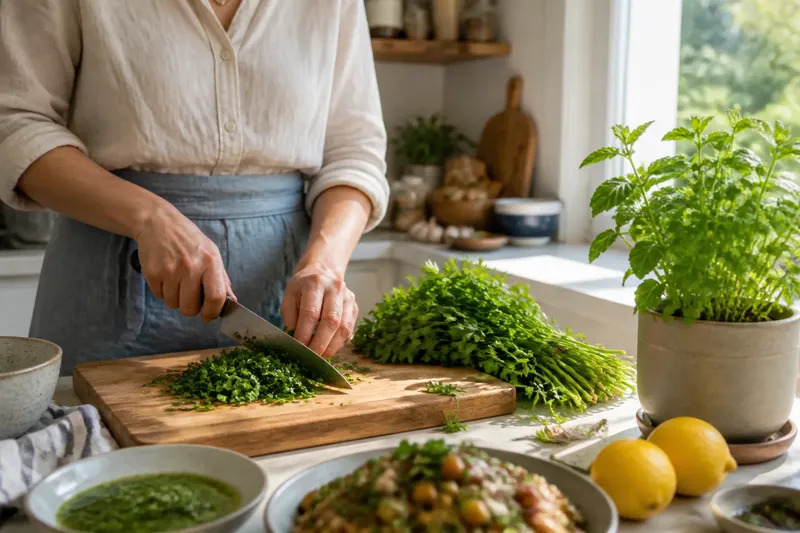
A cut bunch is a gathered quantity, ready to wash, pick and chop. It suits a dish that calls for a generous handful, such as a parsley salad, a coriander-laced bean bowl or a sauce finished with dill.
A pot is a living plant that can provide small pickings over time. It is useful when you like to add a few leaves as you cook, though it is not an endless supply: growth depends on the herb, the plant’s condition and the care it receives.
Think about the shape of your cooking before choosing. A recipe that uses an entire bunch in one sitting points towards cut herbs; frequent small additions to eggs, sandwiches or soup may suit a pot better.
A bunch makes a planned dish straightforward
Cut herbs offer an immediate starting point. The leaves are already gathered, so there is no need to wait for new growth before making salsa verde or adding chopped chives to a potato salad.
The trade-off is timing. Once cut, herbs need a place in the fridge and a plan for use; a bunch can lose freshness while you wait for another recipe to come along.
Buy a bunch when a menu gives it a clear job. If you are making tabbouleh, for instance, parsley is a central ingredient rather than an optional garnish, so having a useful quantity on hand makes sense.
A pot works best when small pickings are welcome
A living pot turns herbs into an accessible kitchen ingredient rather than a one-off purchase. Snipping a few mint leaves for tea or scattering basil over a tomato sandwich can feel easier than keeping a larger cut bunch fresh.
But the word “pot” can make the supply sound more dependable than it is. A plant needs suitable light, water and room for its roots; a struggling pot may offer less than a recipe needs, and some shop-bought plants are crowded or stressed.
Use a pot as a source of occasional additions, not as the sole plan for a dish that depends on a large quantity. If a recipe calls for lots of basil, buy a bunch or allow for the possibility that the plant cannot provide enough.
Storage changes the choice after shopping
Cut herbs generally keep better when their leaves are dry and protected from crushing. Remove damaged leaves, wrap the herbs loosely in a barely damp paper towel and place them in a container or bag in the fridge. Check them as you cook; discard leaves that have become slimy or mouldy.
Some cooks keep tender stems upright in a glass with a little water, loosely covered, in the fridge. This can suit parsley or coriander, but the best arrangement depends on the herb and the space available. Avoid leaving a bunch wedged under heavy groceries, where leaves bruise easily.
A pot is usually kept where it can receive suitable light, with its compost allowed to drain rather than sit waterlogged. A decorative cachepot can hide standing water, so empty it after watering if excess has collected. Check the plant’s label or supplier’s care advice for its particular needs.
If the fridge is already crowded, a pot may seem easier to place; if the windowsill is dim or chilly, a bunch may be the more realistic choice.
Space and light are part of the ingredient
A pot occupies more than the area of its base. Leaves need room to grow, and a plant beside a hob may be exposed to heat, steam or splashes. A bright windowsill or a stable shelf near natural light may work better, provided the pot is not pressed against cold glass.
Cut herbs require temporary storage space rather than a permanent home. That can make them a good choice in a small kitchen, especially when you can buy only what the next meal calls for.
Imagine you cook in a compact flat with a shaded kitchen and plan to make one large batch of coriander chutney. You check the recipe and see it needs a substantial amount of leaves; because the pot has little light and may not provide enough, you choose a cut bunch and prepare the chutney. The observable result is that you have the quantity for the planned dish without relying on uncertain growth. If you instead cook with a few leaves at a time and have a bright spot, a pot may suit that routine better.
Choose by how quickly you can use the leaves
Freshness is not simply a matter of whether a herb is attached to a plant. A cut bunch may be at its best for a particular dish today, while a pot can remain useful if it is healthy and picked modestly. The relevant question is how well each option fits the pace of your meals.
Before buying a bunch, ask which dishes can use the remaining leaves. Parsley stems can flavour stock, while tender leaves can be chopped into lentils; mint may go from a savoury salad to a jug of water. Planning two related uses can make a larger bunch easier to finish.
Before choosing a pot, consider whether you will remember to water it and whether you have somewhere suitable to keep it. A plant that is easy to see may prompt regular use; one tucked behind a kettle may be forgotten.
What should you choose for common kitchen situations?
Which option suits a recipe using lots of herbs?
A cut bunch is usually the more dependable choice when a recipe needs a substantial quantity at once. A pot may work if it is already thriving and the amount needed is modest, but avoid counting on a few small plants to supply a herb-heavy dish.
Can a pot replace buying cut herbs?
It can replace some small purchases if you cook often with that herb and can give the plant a suitable place to grow. It is less suited to recipes that call for a large harvest or a particular herb you use only occasionally.
How can you use a bunch before it wilts?
Give the leaves separate jobs across nearby meals: fold some into a salad, stir some through soup and blend the rest into a dressing. Keep the bunch cool and avoid washing it until you are ready to use it, unless you can dry the leaves thoroughly.
Is a supermarket herb pot ready to keep growing?
Sometimes, but a pot sold for immediate kitchen use may contain many young plants growing close together. Its condition and care needs vary, so follow the label or supplier’s instructions rather than assuming it will behave like a well-established garden plant.
Make the choice around a real meal
A useful decision starts with the next dish, not with the idea that one format is always better. Pick a bunch for a planned recipe that needs plenty of leaves; choose a pot when small, regular snips suit your cooking and your kitchen can support the plant.
You can also combine the two without keeping every herb in both forms. A pot of chives may cover quick finishes, while a bought bunch of coriander supplies the quantity for a particular curry or salsa. This keeps the living plant focused on the herb you reach for often.
When comparing fresh herbs as a bunch or a pot, name the meal, decide whether it needs a handful or a few leaves, then choose the option your storage and kitchen space can accommodate.