The Myth of the Perfectly Matched Table
A perfectly matched table is not needed for a welcoming meal. Repeat one colour, texture or useful detail to make mixed tableware feel considered.
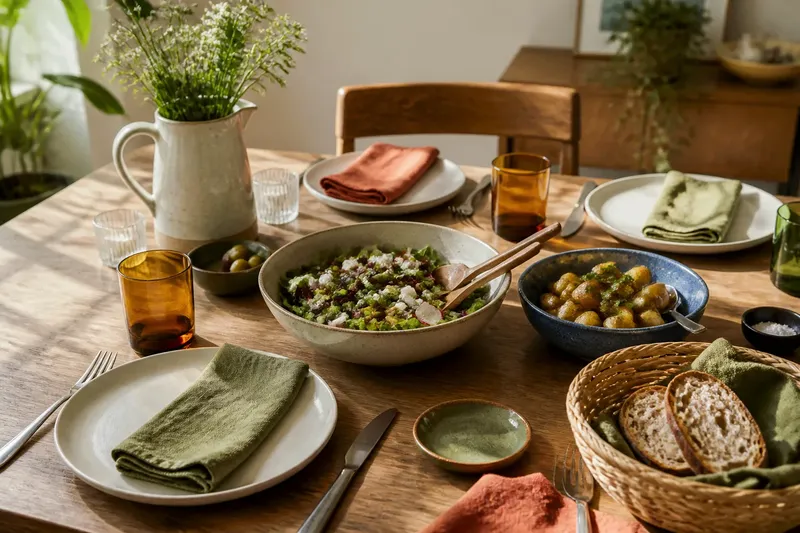
On a Tuesday evening, one blue plate is still in the drying rack, so dinner lands on a cream dish beside a green one. A perfectly matched table is not the only way to make that meal feel considered: a repeated colour, texture or useful detail can bring different pieces together without hiding their differences.
This is less a decorating trick than a way of setting a table around what you actually use. Over a week, small choices can reveal which plates, glasses and serving pieces belong comfortably together, and which details make the meal easier to share.
Begin with the pieces that already serve dinner
Start with the tableware you reach for most often, rather than shopping for a complete set. Put out the everyday plates, bowls, glasses and cutlery, then notice their shapes and surfaces. Stoneware beside plain glass, or a shallow bowl beside a simple dinner plate, can look natural when each piece has a clear purpose.
For the first meal, leave the table uncluttered. A plate at each place, a glass, cutlery and one serving dish are enough to see what is already working. If one item seems out of place, ask whether it is the colour, scale or finish that catches your eye; that answer gives you a more useful starting point than a general sense that everything should match.
Say you have white plates, two amber glasses and a blue serving bowl. Keep the bowl at the centre and place one amber glass at each setting; the repeated warm colour links the glasses to the meal while the white plates leave room for the bowl to stand out. The result is a table with a clear thread, not a uniform set.
Choose one detail to repeat through the week
For the next few meals, choose a single feature to carry across the table. Colour is easy to spot: a rust-coloured napkin, a stripe on a jug, or the rim of a plate can echo elsewhere. Texture works more quietly, such as pairing a woven bread basket with linen napkins or a glazed bowl with a wooden board.
A useful detail can do the same job while earning its place. Repeat small side plates for bread, use the same kind of water glass, or bring out a serving spoon that fits several dishes. Repetition helps the setting feel intentional because the eye encounters a familiar element more than once, while each object can still be different.
- Colour: repeat one shade in napkins, a jug or the edge of a plate.
- Texture: pair woven, linen, glazed or wooden surfaces without repeating every material.
- Shape: echo a rounded bowl with a rounded vase or serving dish.
- Use: give each guest the same kind of bread plate or water glass.
Keep the repeated detail visible but modest. If every surface carries the same colour or pattern, the table can feel more coordinated than comfortable.
Let the meal set the scale and arrangement
On a day when dinner comes from several shared dishes, arrange the setting around passing and serving. Leave a clear space for the main bowl, keep smaller dishes within reach, and avoid placing tall objects where they interrupt conversation. A low jug of flowers or a bowl of fruit can add a focal point without becoming an obstacle.
For a meal served in courses, the table can be simpler at first. Bring out the pieces needed for the opening dish, then add a serving bowl or another plate when the food calls for it. This makes a mixed collection practical: the table does not need to display every object at once to appear complete.
Notice the difference between an intentional mismatch and a troublesome one. A shallow bowl may sit awkwardly beside a plate if it slides or leaves too little room for cutlery; that is a functional issue, not a styling failure. Keep the pieces that help people eat easily, and move the awkward combination to another part of the meal.
How can you adjust a mixed setting after each meal?
How can different plates look as if they belong together?
Repeat one visible feature, such as a colour, rim shape or matte finish, and let the other details vary. A shared feature gives the eye a point of connection without requiring identical plates.
Do glasses and cutlery need to match?
No, provided each place has what the meal needs and the pieces are comfortable to use. Similar glass shapes can create a quiet rhythm, but a varied collection can also feel settled when the rest of the table is simple.
What if one place setting has a different plate?
Give that plate a companion detail: a matching napkin, a familiar side plate or a place beside a repeated serving dish. If the difference is only visible to you and does not affect the meal, there is no need to replace it.
How do you keep a mixed table from looking crowded?
Reduce the number of decorative objects and keep the serving area clear. A few purposeful pieces leave the differences in the tableware easier to appreciate.
Use the weekend to notice what earns a place
After several meals, look at what you actually used. Which bowls held soup without crowding the setting? Which glasses were easy to pass? Did a repeated napkin colour make the table feel settled, or did the serving dishes already provide enough continuity?
Put away pieces that obstruct serving or take attention from the food, but keep variations that make the table useful and personal. Store the less-used items together by purpose, such as dessert bowls or extra serving spoons, rather than trying to assemble a complete visual set.
Next time you set a table, use the perfectly matched table as an option, not a requirement. Begin with the meal, repeat one detail that suits the pieces you own, and leave enough room for food and conversation; a coherent setting can grow from use rather than uniformity.